Overview: Decoding the Ultimate Mahjong Scoring Guide
Welcome to the most comprehensive Mahjong scoring guide available in 2026. Whether you are transitioning from casual kitchen-table play to high-stakes competitive tournaments, or you are a casino enthusiast exploring the strategic depth of Asian-themed gaming, a reliable Mahjong scoring guide is your absolute best asset. Mahjong is a mesmerizing tile-based game of skill, strategy, psychological warfare, and intense calculation that has captivated players worldwide for generations. Finding the perfect Mahjong scoring guide is the first step to mastery. While the core objective—forming a complete hand consisting of four specific melds and one pair—is relatively simple for beginners to grasp, the true soul of the game lies in the intricate, highly mathematical, and often bewildering world of point calculation.
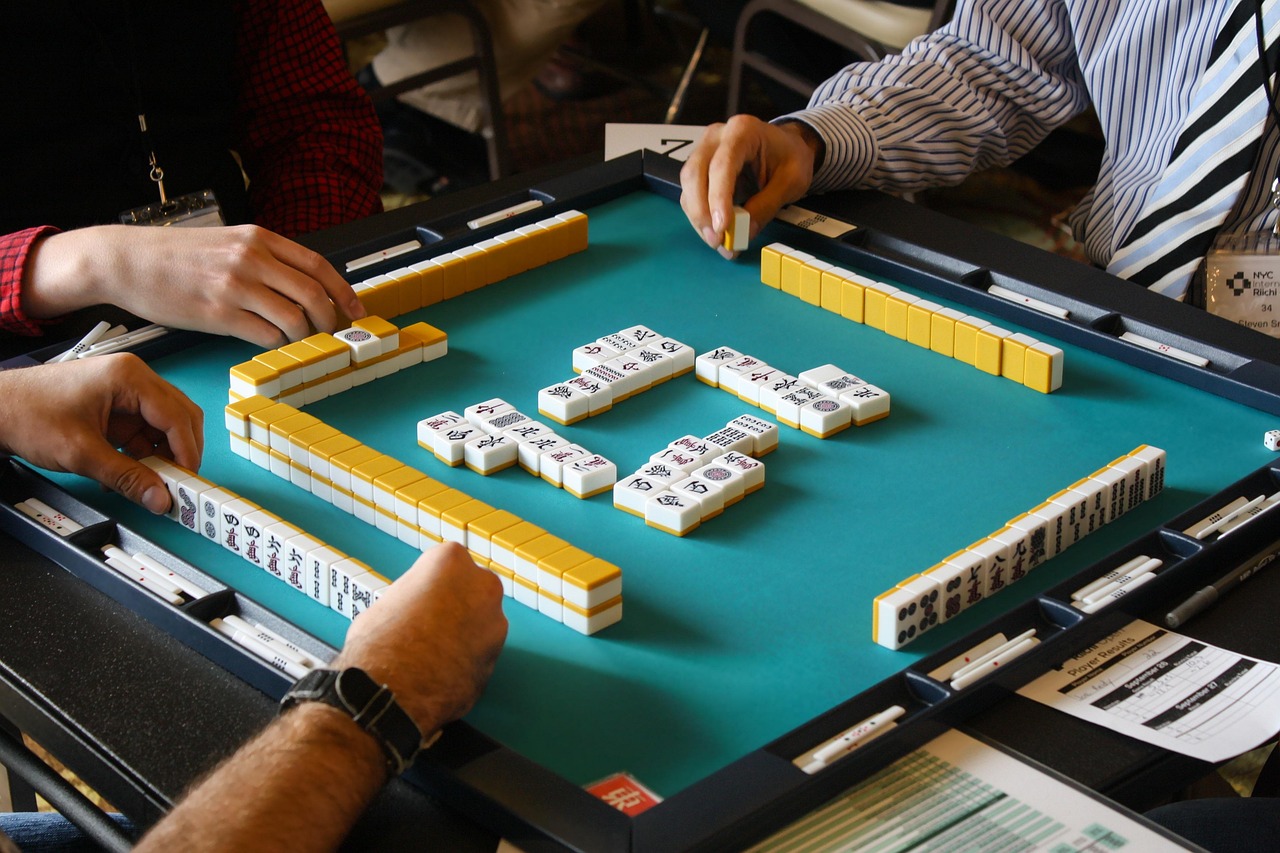
Every serious player needs a definitive Mahjong scoring guide to navigate the intricate mechanics of this classic tile game. Unlike simple games of pure chance found on the casino floor, Mahjong requires deep strategic calculation and foresight. By consulting a detailed Mahjong scoring guide, players can understand exactly how different regional variations calculate their winning hands. The complexity of the game arises from the dozens of regional variations, each boasting its own unique scoring table, localized rules, and subtle nuances. The most prominent systems played globally today include Mahjong Competition Rules (MCR or Chinese Official), Japanese Riichi Mahjong, Hong Kong Old Style, and American Mahjong. The history of Mahjong is as rich as its gameplay. Originating in China during the Qing dynasty, the game spread globally in the early 20th century. As it traveled, different cultures adapted the rules, leading to the fragmented scoring systems we see today. A reliable Mahjong scoring guide will outline these historical differences.
In the fast-paced competitive scene of 2026, using a proper Mahjong scoring guide ensures you do not leave valuable points on the table. The foundation of any robust Mahjong scoring guide rests on two main mathematical pillars: the base value of the hand (often referred to as Fu in Japanese variants) and the multipliers based on achieving specific, difficult tile patterns (known as Fan, Han, or Yaku). Understanding how these two elements interact is the key to unlocking massive scores. When you first look at a Mahjong scoring guide, the sheer volume of patterns can be intimidating. However, breaking them down into categories—such as suit-based patterns, honor-based patterns, and sequence-based patterns—makes memorization much easier.
| Feature | Details |
|---|---|
| Core Systems | MCR (81 patterns), Riichi (Yaku & Dora), American (NMJL) |
| Base Points | Fu (Japanese Riichi) – awarded for hand composition |
| Multipliers | Fan / Han (Doubles) – awarded for specific patterns |
| Volatility | Extremely High (Player vs Player penalty payouts) |
| Minimum Win | MCR requires 8 points; Riichi requires at least 1 Yaku |
| Year Updated | 2026 Standards |
How to Play: Applying Your Mahjong Scoring Guide
Understanding the theoretical rules is only half the battle; applying a Mahjong scoring guide in real-time under the pressure of a live match is where true skill lies. When you sit down at the table and the tiles are dealt, your very first step should be evaluating your initial hand against the high-value patterns listed in your Mahjong scoring guide. This initial assessment dictates your entire strategy for the round. Beyond just knowing the points, executing a winning strategy involves psychological warfare. You must constantly monitor the discard pile (the river). If you notice an opponent discarding high-value honor tiles early in the round, they might be rushing a simple, fast hand. Conversely, if they are discarding middle tiles and holding onto terminals and honors, they could be building a devastatingly high-scoring hand like ‘Half Flush’ or ‘All Terminals’. Your ability to adapt your own hand’s development based on these subtle clues, while referencing your mental Mahjong scoring guide, is paramount.
Mastering the Base Points (Fu)
In popular variations like Japanese Riichi, a detailed Mahjong scoring guide will thoroughly explain the concept of ‘Fu’ or mini-points. You earn Fu for the fundamental, structural composition of your hand. This includes specific points allocated for the types of melds you create. For example, a concealed Pung (three of a kind) of terminal tiles (1s and 9s) or honor tiles (Winds and Dragons) is worth significantly more Fu than an open Pung of simple middle tiles (2 through 8). Furthermore, points are awarded for the pair you hold, and the specific way you complete your hand, known as the ‘wait’ (e.g., waiting on a single tile to complete a pair, or waiting on a middle tile to complete a sequence, yields more points than a standard two-sided wait).
Calculating Multipliers (Fan/Han/Yaku)
The absolute core of any Mahjong scoring guide is the extensive pattern list. These are specific combinations or conditions met by a player’s hand, such as ‘All Pungs’ (Toitoi), ‘Pure Straight’ (Ikkitsuukan), or ‘Seven Pairs’ (Chiitoitsu). Each pattern awards a certain number of doubles, known as Fan or Han. As your Mahjong scoring guide will mathematically demonstrate, these values are cumulative and can scale exponentially. Stacking multiple patterns together can turn a basic, low-value win into a massive, game-ending payout. For instance, combining a fully concealed hand with a half-flush (Honitsu) and a few Dora tiles will skyrocket your final score.
Choosing the Right System for 2026
For beginners entering the scene in 2026, a universal Mahjong scoring guide covering all variants might seem overwhelming. It is highly recommended by professionals to focus on learning one specific rule set thoroughly before branching out. Mahjong Competition Rules (MCR) is the official international tournament standard. It features a strict rule that a hand must score a minimum of 8 points to be declared a valid win. This brilliant mechanic prevents overly cheap, fast hands and forces players into deep strategic construction. Furthermore, understanding the concept of ‘Furiten’ in Japanese Riichi—a rule that prevents you from winning on a discard if you have previously discarded any tile that could complete your current wait—adds another profound layer of strategic depth and requires immaculate memory and planning.
Bonus Features and High-Value Patterns
While traditional Mahjong doesn’t feature flashing bonus rounds or free spins like modern video slots, it does feature incredibly high-value patterns that act as massive multipliers. A premium Mahjong scoring guide will always highlight these “big ticket” hands, as they are the key to dominating your opponents.
The Power of Concealment
One of the most critical bonus features detailed in a Mahjong scoring guide is the concealment bonus. In almost all Asian variants, keeping your hand fully concealed—meaning you build your hand entirely by drawing from the wall and not calling ‘Chow’ or ‘Pung’ on your opponents’ discarded tiles—significantly boosts your final score. It often awards an extra pattern multiplier (like Menzen Tsumo) and increases your base Fu value. The psychological pressure of a concealed hand also keeps your opponents guessing, as they cannot read your open melds.
Legendary Hands and Jackpots
Consult your Mahjong scoring guide for legendary, maximum-value hands like ‘Thirteen Orphans’ (Kokushi Musou), ‘Big Three Dragons’ (Daisangen), or ‘All Honors’ (Tsuuiisou). These hands act as the ultimate progressive jackpots of the Mahjong world. They are incredibly rare, but achieving one guarantees a massive influx of points, often enough to instantly win the entire match. Even if you fail to complete these monster hands, aiming for their structures early in the game often leaves you with a highly valuable, flexible fallback hand. Another fascinating aspect of high-value hands is the concept of ‘Yakuman’ in Japanese Riichi or ‘Limit Hands’ in MCR. These are hands so difficult to assemble that they bypass standard point calculations entirely, awarding a fixed, maximum score. The thrill of drawing closer to a Yakuman is unmatched, and every Mahjong scoring guide dedicates a special section to these rare phenomena. Tournaments in 2026 often feature special bounties or recognition for players who manage to pull off these spectacular feats of tile manipulation.
RTP/Volatility in Mahjong Scoring
Traditional casino metrics like Return to Player (RTP) percentages do not directly apply to skill-based, player-versus-player games like Mahjong. However, the underlying concept of volatility is deeply embedded in the mechanics of any comprehensive Mahjong scoring guide. Understanding this volatility is what separates amateurs from seasoned professionals.
Understanding Payout Volatility
The payout systems in Mahjong create extreme volatility and risk. In most rule sets, if you discard the specific tile that allows an opponent to declare a win (known as Ron), you alone are penalized and must pay the full value of their hand. Conversely, if the winner draws the winning tile themselves from the wall (known as Tsumo), the cost of the hand is split among all three losing opponents. This punishing mechanic, heavily emphasized in any advanced Mahjong scoring guide, means a single careless discard in the late game can completely decimate your chip stack and drop you from first to last place in an instant.
Defensive Strategies for Modern Play
Because of this high payout volatility, modern competitive gameplay in 2026 requires intense defensive reading and situational awareness. A top-tier Mahjong scoring guide will teach you how to “read the table” effectively. For example, if an opponent declares ‘Riichi’ (betting 1,000 points that they are exactly one tile away from a concealed win), the priority for all other players must immediately shift from offense to pure defense. By meticulously tracking their discards and the tiles visible on the table, you can deduce which tiles are statistically safe to discard (Suji), minimizing your risk of a catastrophic penalty payout. To mitigate the intense volatility outlined in your Mahjong scoring guide, professional players employ a concept known as ’tile efficiency’ (Paishi). Tile efficiency is the mathematical optimization of your hand to ensure you are always maximizing your probability of drawing a useful tile. By mathematically analyzing the remaining tiles in the wall and the discards, players can structure their hands to have the widest possible ‘waits’. Balancing flawless tile efficiency with rigorous defensive discipline is the ultimate test of a true Mahjong master.
Editorial Review: This guide has been reviewed by the editorial team for clarity, practical value, mobile usability, payment safety, and safer decision-making.