Quick Summary
Welcome to the ultimate guide for mastering the ancient Chinese tile game in 2026. If you are stepping into this strategic world for the first time, finding reliable Mahjong beginner tips is absolutely essential. This comprehensive guide breaks down the complex 144-tile system, explains the core mechanics of forming melds (Pungs, Chows, and Kongs), and provides actionable strategies to improve your win rate. Whether you are playing traditional tabletop games or exploring modern casino adaptations, these Mahjong beginner tips will accelerate your learning curve and transform you from a novice into a formidable player.
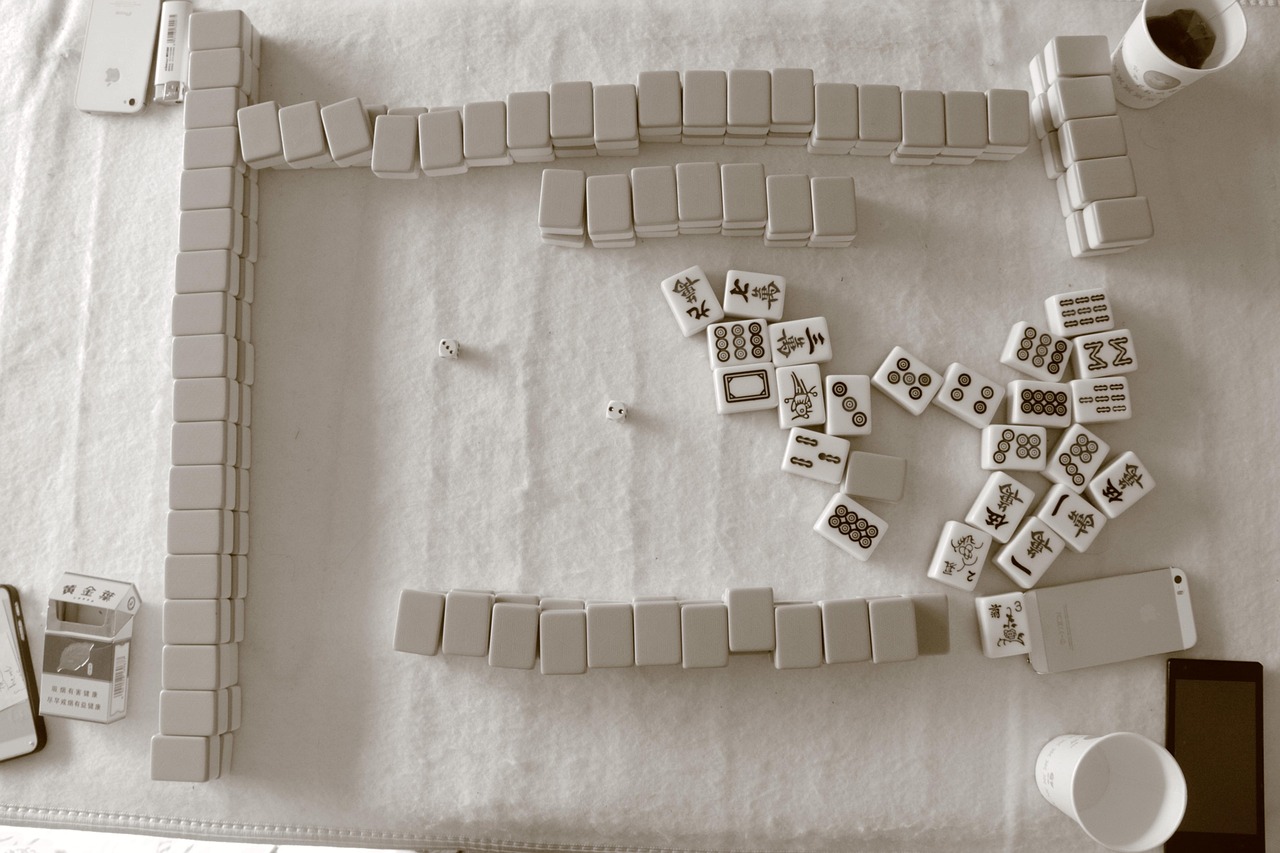
Overview: The Evolution of Mahjong in 2026
Originating in China during the Qing dynasty, Mahjong has evolved from a regional pastime into a global phenomenon. Far more than a simple game of chance, it is a complex tapestry of strategy, mathematical calculation, psychology, and a degree of luck. In 2026, the game’s popularity has reached new heights, bridging the gap between traditional parlors and cutting-edge online casinos. For new players, the sheer volume of tiles and intricate scoring rules can feel overwhelming. That is precisely why studying proven Mahjong beginner tips is the most effective way to grasp the game’s flow. By internalizing these Mahjong beginner tips, you can quickly move past the intimidation factor and start enjoying the deep, rewarding gameplay that has captivated millions worldwide.
Key Facts
| Feature | Details |
|---|---|
| Origin | China (Mid-19th Century, Qing Dynasty) |
| Player Count | Typically 4 players (3-player variants exist) |
| Total Tiles | 144 standard tiles |
| Suits | Bamboos, Characters (Cracks), Circles (Dots) |
| Honors | Winds (East, South, West, North) & Dragons (Red, Green, White) |
| Winning Hand | Usually 4 Melds (Sets) and 1 Pair (Eye) |
How to Play: The Fundamentals
Before diving into advanced strategies, any solid foundation of Mahjong beginner tips must start with the core mechanics. The game revolves around drawing and discarding tiles to build a complete, winning hand. Here is how the gameplay loop functions in a standard match.
Building the Wall and Dealing
The game begins with shuffling the 144 tiles face down. Players then build a two-tiered square wall. Each player is dealt 13 starting tiles, while the dealer (usually East wind) starts with 14. A crucial piece of advice among Mahjong beginner tips is to organize your starting hand immediately by suit and number to assess your potential paths to victory.
The Turn Structure
During a standard turn, a player draws one tile from the wall and discards one tile face-up into the center pool. The ultimate goal is to improve your hand step-by-step. Applying Mahjong beginner tips here means paying close attention not just to what you draw, but to what your opponents are discarding.
Understanding Melds (Sets)
To declare “Hu” (win), you generally need four melds and one pair. Understanding these sets is one of the most critical Mahjong beginner tips you can learn:
- Pung (Pong): A set of three identical tiles (e.g., three 4s of Bamboos).
- Chow: A consecutive sequence of three tiles in the same suit (e.g., 5, 6, 7 of Circles). Note that a Chow can typically only be claimed from the player immediately to your left.
- Kong (Kang): A set of four identical tiles. Declaring a Kong allows you to draw a replacement tile.
- Pair (Eye): Two identical tiles, essential for completing the standard winning hand structure.
Bonus Features and Advanced Play
As you progress beyond basic Mahjong beginner tips, you will encounter bonus features that vary by regional rules. Traditional sets include eight Bonus Tiles: four Flowers and four Seasons. In many rule sets, drawing one of these grants bonus points and an extra draw, though they are not used to form standard melds.
In modern variations like Japanese Riichi Mahjong—which has seen a massive surge in competitive play in 2026—players must also navigate “Dora” tiles. These are indicator tiles that add multiplier values to a winning hand. Advanced Mahjong beginner tips often focus on how to integrate Dora tiles into your hand without sacrificing the speed of your meld completion. Furthermore, the crossover of Mahjong into the casino slot world (such as PG Soft’s popular Mahjong Ways series) utilizes cascading reels and multiplier trails as their “bonus features,” rewarding players who understand the traditional tile hierarchies.
RTP/Volatility in Mahjong
When discussing traditional table games versus casino games, metrics like Return to Player (RTP) and Volatility take on different meanings. A comprehensive list of Mahjong beginner tips must address the mathematical realities of the game.
Skill vs. House Edge (RTP)
Unlike slot machines where the RTP is hardcoded (e.g., 96%), traditional Mahjong is a peer-to-peer game of skill. There is no “house edge” in the gameplay itself, only the rake or entry fee taken by a tournament organizer or casino platform. Therefore, your personal RTP is entirely dictated by your skill level. If you rigorously apply the best Mahjong beginner tips, your long-term return will be positive against weaker players. In Mahjong-themed slot games, however, the RTP is fixed, usually hovering between 95% and 97%.
Understanding Volatility
Volatility in Mahjong refers to the point swings during a match. Rule sets like Japanese Riichi are highly volatile; a single hand can bankrupt a player due to hidden multipliers (Ura-Dora) and strict penalty payments. Conversely, traditional Chinese rules often feature flatter scoring, resulting in lower volatility. One of the most vital Mahjong beginner tips for managing volatility is learning defensive play—knowing when to fold your hand to avoid paying into an opponent’s high-value win.
Top 10 Essential Mahjong Beginner Tips
To elevate your game in 2026, we have compiled the ultimate strategic checklist. Consistently applying these Mahjong beginner tips will drastically improve your decision-making at the table.
1. Master Tile Recognition Instantly
The most foundational of all Mahjong beginner tips is to memorize the tiles. You must be able to instantly recognize the three suits (Bamboos, Characters, Circles), read the Chinese numerals 1-9, and identify the Winds and Dragons. Hesitation reveals your hand’s weakness to observant opponents.
2. Keep the Goal in Mind: 4 Melds, 1 Pair
Every decision should be filtered through this simple objective. One of the best Mahjong beginner tips is to constantly ask yourself, “Does this discard bring me closer to four sets and a pair?” If a tile does not serve this purpose, it is dead weight.
3. Prioritize Flexibility and Pairs
A hand with multiple pairs is highly adaptable. Any pair can serve as your final “Eye,” while the others can easily be turned into Pungs. Many Mahjong beginner tips emphasize keeping your hand flexible rather than committing to a rigid straight (Chow) too early.
4. Discard Honors and Terminals Early
Isolated Wind and Dragon tiles (Honors) that do not match your seat or the round wind are statistically weak. Discard them early. Similarly, terminal tiles (1s and 9s) are less versatile than middle tiles (3 through 7). A middle 5 can form three different Chows, while a 1 can only form one (1-2-3). This is one of the most mathematically sound Mahjong beginner tips available.
5. Think Twice Before Calling a Meld
When you call “Chow” or “Pung” from an opponent’s discard, you must expose those tiles. This locks in your hand and gives opponents free information. Crucial Mahjong beginner tips dictate that you should only open your hand if it significantly accelerates your win or secures a high-scoring condition.
6. Learn the Art of Defense
Mahjong is not just about winning; it is about not losing. If an opponent is clearly close to winning (e.g., they declare Riichi or have exposed three high-value melds), you must pivot. Defensive Mahjong beginner tips teach you to discard “safe tiles”—tiles that have already been discarded recently, as opponents cannot claim them for a win.
7. Do Not Get Greedy
As a novice, chasing the highest-scoring, most complex hands is a trap. Practical Mahjong beginner tips suggest aiming for simple, fast hands. Winning a low-value hand is infinitely better than losing while holding a beautiful, incomplete high-value hand.
8. Track the Discard Pool
The discard pool is a wealth of information. If you need a 7 of Circles to complete your hand, but you see three of them already in the discard pool, your chances of drawing the last one are incredibly slim. Advanced Mahjong beginner tips bridge into intermediate play by teaching you to count visible tiles.
9. Adapt to the Rule Set
In 2026, you might play Hong Kong style, Riichi, or American Mahjong. Each has distinct scoring conditions. The most adaptable Mahjong beginner tips remind you to thoroughly read the specific scoring sheet before the first tile is drawn.
10. Practice Online
The best way to solidify these Mahjong beginner tips is through repetition. Utilize free online platforms or digital casino demos to play dozens of hands per hour. The digital environment handles the scoring and rule enforcement, allowing you to focus purely on implementing these Mahjong beginner tips.
Editorial Review: This guide has been reviewed by the editorial team for clarity, practical value, mobile usability, payment safety, and safer decision-making.